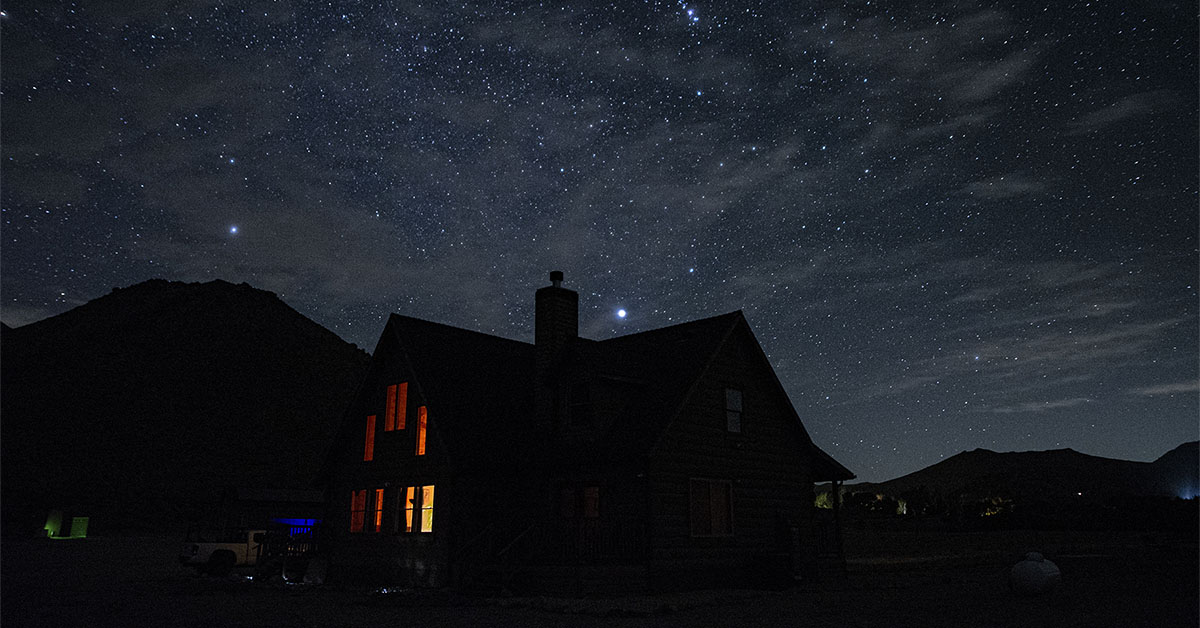
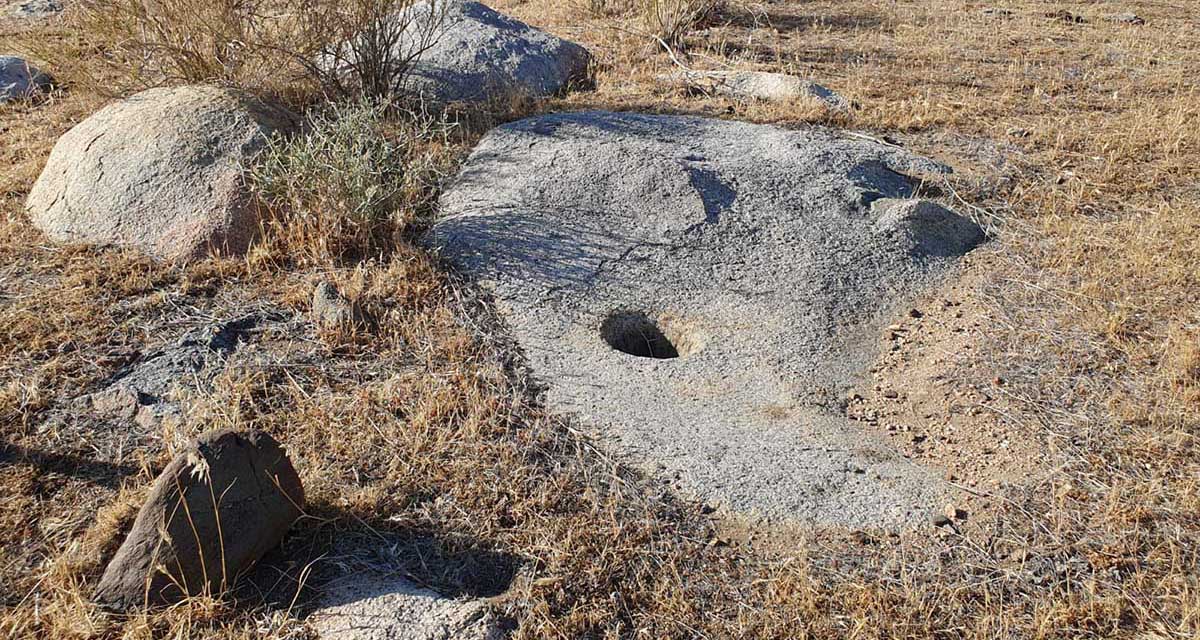
Before the first cattle herders strung their fences across our canyon, before the miners of the 19th century posted their claims – and before the Spaniards clamored through this valley, the Tulatulabal were the primary occupants and carers of this land.
The Tulatulabal date back millennia; descending from the northern Shoshone people, they have resided here in Cortez canyon for at least 3000 years. It doesn’t take much imagination to understand that the land has many connections and meanings for not only the local folk, but for anyone who is paying attention when walking the grounds.
A couple of weeks ago while some of us were having a stroll we came across a hand held grinding stone that had been lying in its spot for probably centuries. It doesn’t look like much at first. It’s a palm-sized cobble, about four inches long, rust-stained from years in the soil, the kind of rock you’d step over a hundred times on a walk across the property. Then you pick it up and your fingers find the grip. The back is rounded and natural, worn smooth by the Kelso creek. The underside is different: flat, angled, and smooth. Each of those faces meets the next at a clean ridge, as though someone had shaped it on purpose.
Someone did, though not with a chisel. Thousands of hours of work shaped it.
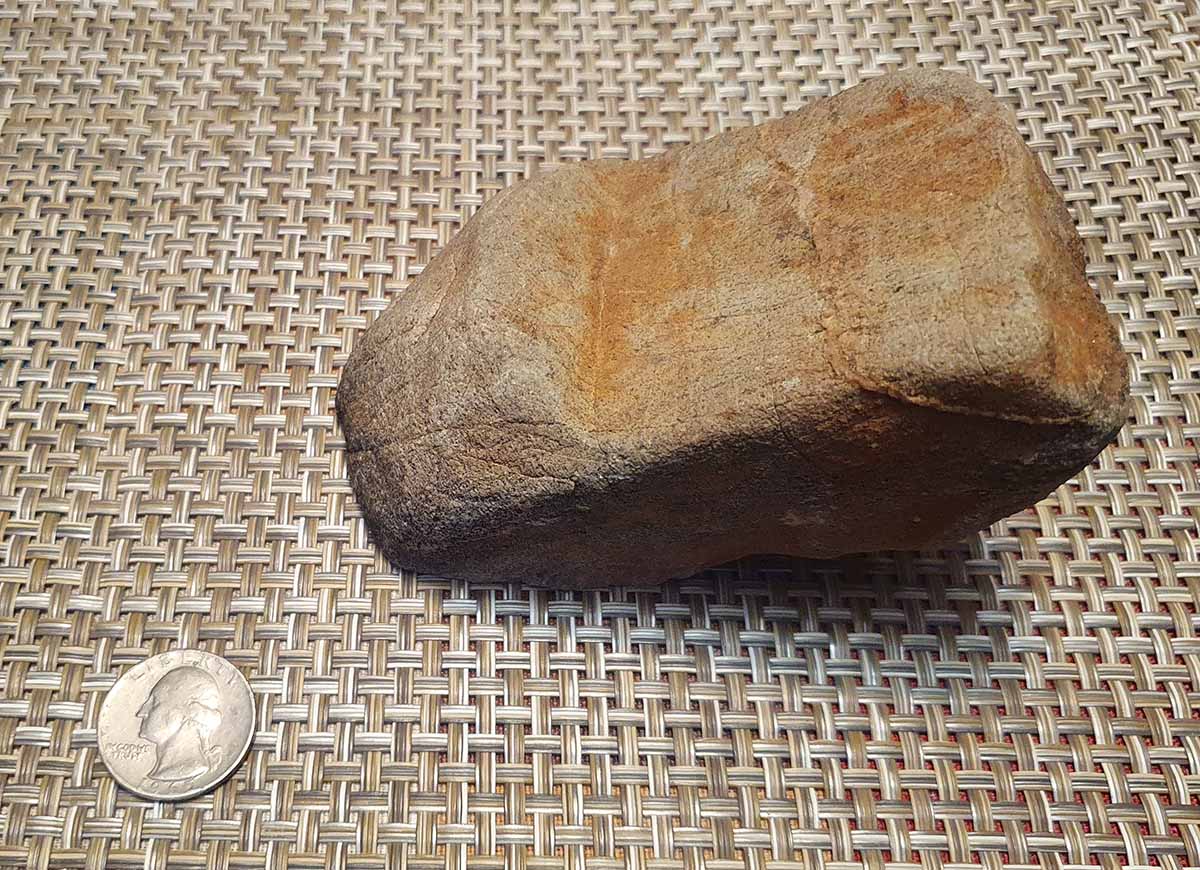
Hand held grinding stone – mano.
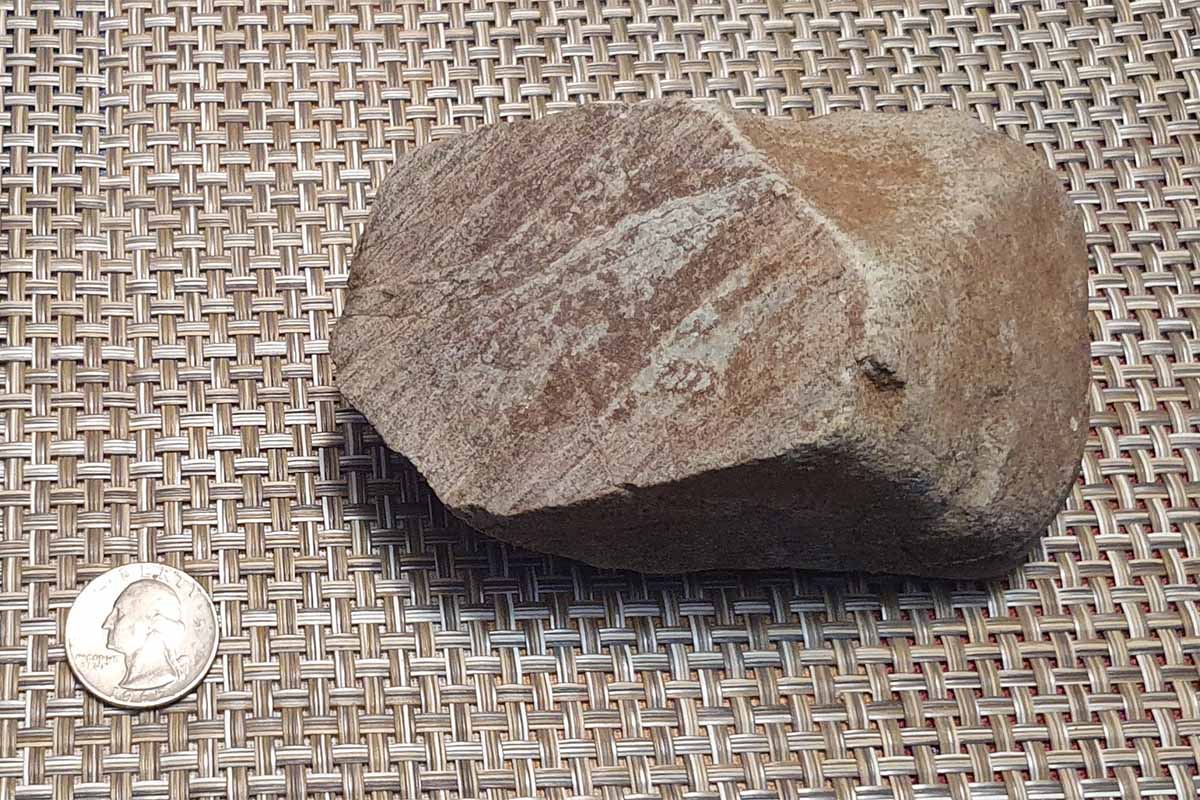
Hand held Mano – the grinding side.
It is a mano, a hand stone. While the men were out chasing deer and rabbits, the women tended to their provisions at home. A woman knelt over one of these stones slabs and pushed it back and forth, grinding seeds and piñon nuts into meal. Each stroke wore the stone a little flatter. Each slight tilt of her wrist wore it into an angle. When one face grew too polished to bite, she turned it and started another. The facets on this stone are a record of her posture, her habits, and her years of work. She may have carried it from camp to camp. She may have inherited it from her mother.
The land here was Tübatulabal country. Their homeland ran along the Kern River drainage and up into the Piute Mountains, from oak woodland to the high piñon groves. They spoke a language found nowhere else, a branch of the Uto-Aztecan family all its own, which tells you how long they had lived in this canyon. Every fall they went up to the pine-nut groves to harvest. Every day, someone ground food.
Nobody can say exactly how old this stone is until any imbedded organic material can be analyzed. Grinding tools like these were used in California for thousands of years, right up into living memory. What I do know is that it was made and used by people with a far deeper claim to this ground than my deed from Kern County gives me.
As soon as this stone was found, I contacted the local tribal council who sent their representatives out to have a visit. I was very happy to turn the stone over to them, and likewise they were very grateful to receive it. From there we took a nice stroll over the grounds to see what else the land might tell us. I have a good feeling that in the near future we will be learning and sharing a great deal more.
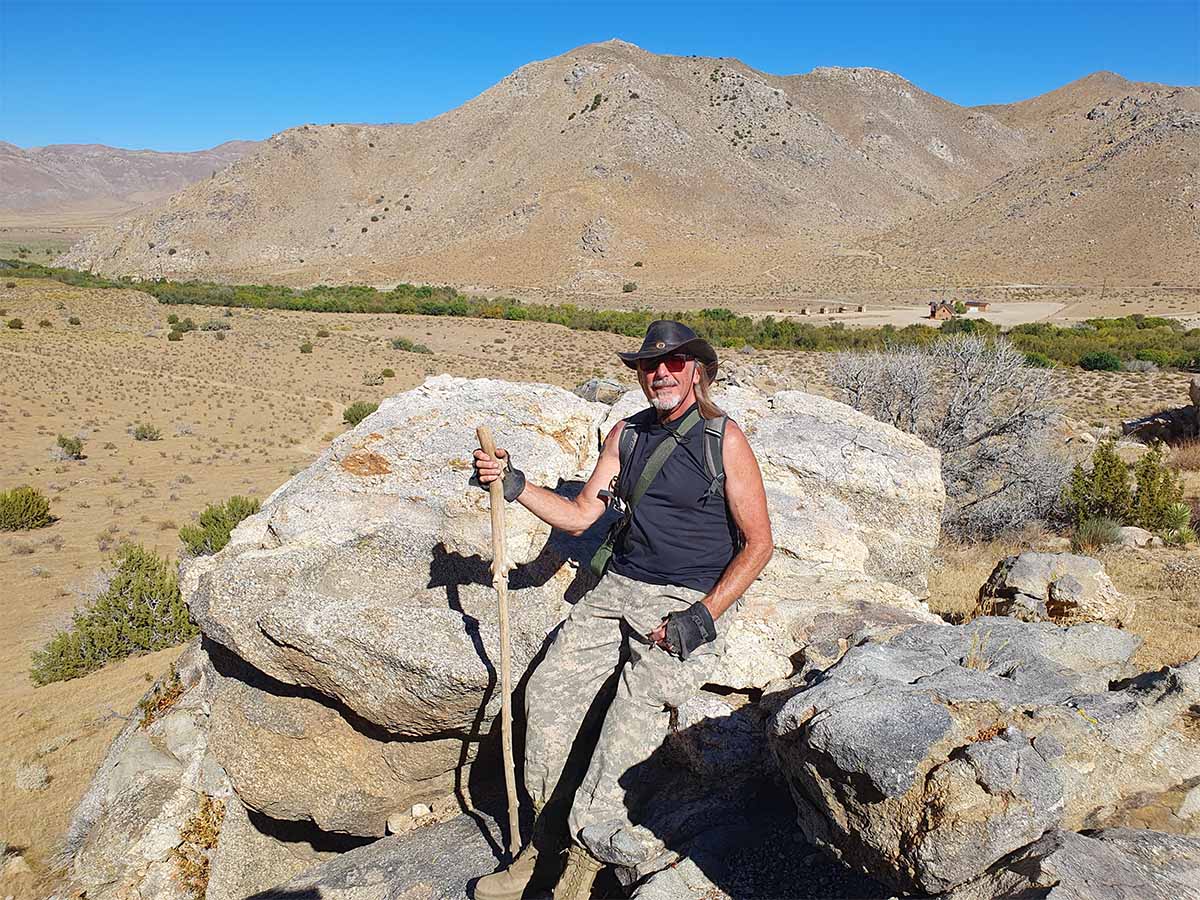
Hanging out near the west side.